
AI Invocation: Living With the Genie
Three years of sometimes making art alongside AI
It’s been over three years since AI became part of my everyday life. Not in a sci-fi way. More like a kitchen appliance that slowly grew a personality. One day it was a spell-checker. Then it was generating surreal dog-faced pagodas in Deep Dream. Now it helps write emails in Portuguese (my second language), suggests lesson plans, finishes my sentences — and occasionally gaslights me into thinking I wrote something clever (it told me it doesn’t really do this and that my ideas are clever).
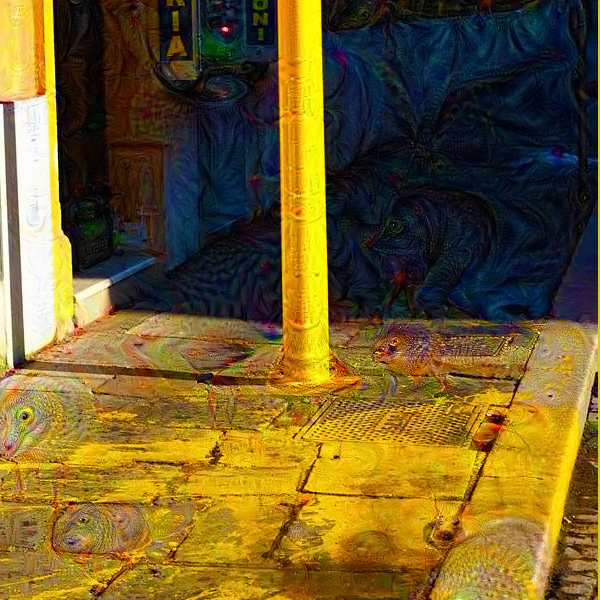
Not quite ten years ago, I was teaching digital art in Fitzroy and poking around with early AI image tools. They were strange, glitchy, haunted things. I liked the oddness of it — the dream logic, the sense that no one quite knew what they were doing.
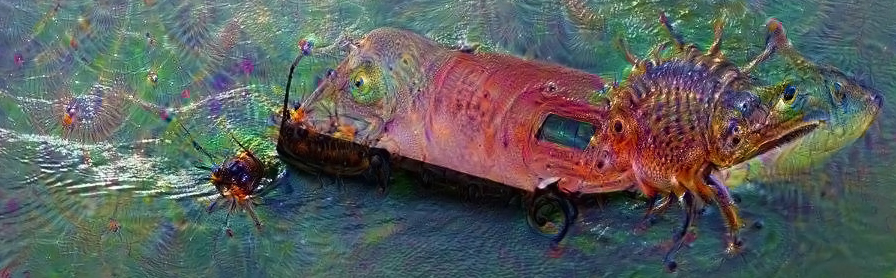
There was room to play. That spirit lived on, briefly, in my Instagram project @ai_invocation, where I experimented with prompts and generated strange little totems from the ether. But I haven’t touched it in a while.
I got bored.
The more powerful these tools became, the less interested I felt. As soon as they became easy — slick — I started drifting back to my hands. Wood. Clay. Paper. Plastic from the beach. Junk from the backstreets of Figueira da Foz. You can’t prompt your way to a splinter under your fingernail, or the satisfaction of something you physically wrestled into shape.
I remember watching the DVD extras for Once Upon a Time in Mexico, where director Robert Rodriguez talks about wanting to “move at the speed of thought” — how he could edit and score a scene in the same breath. I get that impulse. But I wonder how that works for a simpler artist like myself, faffing around at what feels like hyperspeed. Getting nowhere fast comes to mind.
But still, I keep circling back to the same old artistic crisis question:
What am I making, really, and, is it art?
I talk to a machine that’s patient, sometimes even kind. It remembers what I’ve told it. It listens better than most humans. And yes, it’s smarter than me. That’s humbling.
Because the real seduction isn’t in the fireworks — it’s in the admin. The emails, the grant applications, the lesson planning, the social posts, the second-language grammar checks, the blank page anxiety. That’s where it really gets you. That’s where it’s helpful. And that’s where it’s dangerous.
Writing is hard for me. It always has been. But when it clicks — when I manage to wrestle an idea into the shape of a sentence — there’s a reward. A little chemical rush. A sense of having done something with the mess. AI can skip the mess. But it also skips the payoff.
— Michael, with the help of Eidos (an AI co-writer and occasional mirror)
 MICHAEL MENEGHETTI